15th Prime Minister of Canada
Pierre Trudeau
Liberal prime minister of Canada, 1968–1979 and 1980–1984.
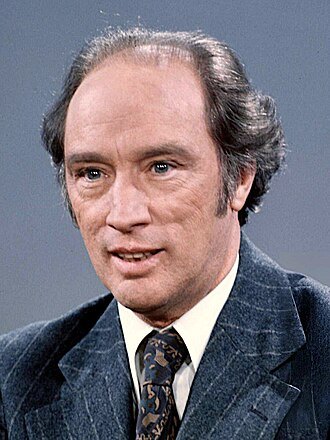
Biography
Pierre Elliott Trudeau was born on October 18, 1919, in Montreal, the son of Charles-Émile Trudeau, a francophone businessman who made a fortune in service stations, and Grace Elliott, who was of Scottish and French descent. He grew up bilingual, attended the Jesuit Collège Jean-de-Brébeuf and earned a law degree from the Université de Montréal in 1943. He went on to graduate study in political economy at Harvard University, and then studied in Paris and at the London School of Economics.
Back in Quebec, Trudeau backed the striking miners during the Asbestos strike of 1949 and worked for a time in the Privy Council Office in Ottawa. In 1950 he co-founded Cité libre, a journal that criticized the Duplessis government and Quebec nationalism and argued for civil liberties and a strong federal state. He practised labour and civil liberties law, wrote widely, and in 1961 joined the law faculty of the Université de Montréal.
In 1965 Trudeau joined the Liberal Party together with the labour leader Jean Marchand and the journalist Gérard Pelletier, and he won the Montreal riding of Mount Royal in that year's election. He became parliamentary secretary to Prime Minister Lester B. Pearson in 1966 and minister of justice in 1967. As minister he introduced a broad set of Criminal Code amendments that liberalized divorce, decriminalized private homosexual acts between consenting adults and permitted contraception and therapeutic abortion under set conditions; they became law in 1969.
When Pearson retired, Trudeau won the Liberal leadership in April 1968 and was sworn in as prime minister on April 20. He called an election for June 1968 and won a majority. His government passed the Official Languages Act in 1969, recognized the People's Republic of China in 1970 and adopted a federal multiculturalism policy in 1971. During the October Crisis of 1970, after the Front de libération du Québec kidnapped a British diplomat and a Quebec cabinet minister, it invoked the War Measures Act. The Liberals were reduced to a minority in 1972 and regained a majority in 1974. In 1975 the government created Petro-Canada and introduced wage and price controls to fight inflation.
Trudeau lost the May 1979 election to Joe Clark's Progressive Conservatives and announced his retirement that November. When the Clark government was defeated in the House in December, he withdrew his resignation, and the Liberals won a majority in February 1980. He campaigned for the federalist side in the Quebec referendum of May 1980, which rejected sovereignty-association. His government introduced the National Energy Program in 1980 and, after lengthy negotiations with the provinces, patriated the Constitution. The Constitution Act, 1982, including the Canadian Charter of Rights and Freedoms, was proclaimed on April 17, 1982; Quebec's government did not agree to it.
Trudeau announced his retirement in February 1984 and was succeeded by John Turner on June 30 of that year. He joined a Montreal law firm and spoke out against the Meech Lake and Charlottetown constitutional accords. He had married Margaret Sinclair in 1971; they had three sons, Justin, Alexandre and Michel, before separating in 1977 and divorcing in 1984. He also had a daughter, Sarah, born in 1991. His son Michel died in an avalanche in 1998. Trudeau died in Montreal on September 28, 2000, and was given a state funeral. His son Justin later served as prime minister from 2015 to 2025.
Public debt while in office
1968–1979
- Debt to GDP, taking office
- 57% (end-1967)
- Leaving office
- 47.1% (end-1978)
- Change
- -9.9 points of GDP
- In dollars (at the time)
- $40.5 billion → $117.9 billion
1980–1984
- Debt to GDP, taking office
- 44.2% (end-1979)
- Leaving office
- 57.2% (end-1983)
- Change
- +13 points of GDP
- In dollars (at the time)
- $126.3 billion → $241.0 billion
Gross public debt of all levels of government as a share of GDP at the year-end nearest each change of prime minister (IMF). Compare every prime minister.