12th Prime Minister of Canada
Louis St. Laurent
Liberal prime minister of Canada, 1948–1957.
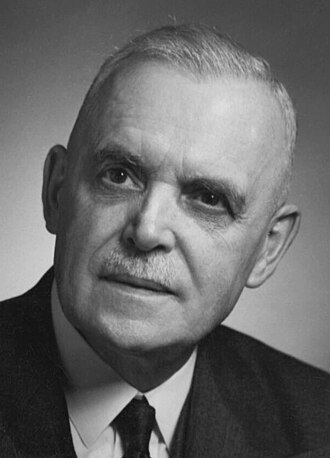
Biography
Louis Stephen St. Laurent was born on February 1, 1882, in Compton, in Quebec's Eastern Townships. His father was a French-Canadian shopkeeper and his mother was of Irish descent, and he grew up speaking both French and English. He studied at the Séminaire Saint-Charles-Borromée in Sherbrooke and earned a law degree from Université Laval in 1905.
St. Laurent practised law in Quebec City for more than 35 years, becoming one of the country's leading corporate and constitutional lawyers, and he also taught law at Laval. He served as president of the Canadian Bar Association from 1930 to 1932 and later acted as counsel to the Royal Commission on Dominion-Provincial Relations. He married Jeanne Renault in 1908, and they raised a family in Quebec City.
After the death of justice minister Ernest Lapointe in 1941, Prime Minister Mackenzie King asked St. Laurent to join his wartime cabinet. He became minister of justice in December 1941 and won Lapointe's former riding of Quebec East in a by-election in February 1942. During the conscription crisis of 1944 he supported sending conscripts overseas, which helped King hold his cabinet together. He became secretary of state for external affairs in 1946 and was an early advocate of a North Atlantic security alliance.
St. Laurent won the Liberal leadership in August 1948 and succeeded King as prime minister on November 15, 1948. He led the Liberals to large majorities in the elections of 1949 and 1953. Newfoundland joined Confederation on March 31, 1949, and Canada became a founding member of the North Atlantic Treaty Organization that April. In 1949 Parliament ended appeals to the Judicial Committee of the Privy Council in Britain, making the Supreme Court of Canada the final court of appeal, and gained the power to amend the constitution in matters of purely federal concern. Canada sent forces to the Korean War from 1950, and Vincent Massey became the first Canadian-born governor general in 1952.
Domestically, the government introduced a universal old age pension through the Old Age Security Act of 1951, began equalization payments to the provinces in 1957 and passed the Hospital Insurance and Diagnostic Services Act in 1957. It funded construction of the Trans-Canada Highway, joined the United States in building the St. Lawrence Seaway and, following the recommendations of the Massey Commission, created the Canada Council for the Arts in 1957. In 1956 its use of closure to pass legislation financing the TransCanada natural gas pipeline caused a prolonged dispute in the House of Commons, and the same year Canada supported the United Nations response to the Suez Crisis.
In the election of June 10, 1957, the Progressive Conservatives under John Diefenbaker won more seats than the Liberals, and St. Laurent resigned as prime minister on June 21, 1957. He stepped down as Liberal leader in January 1958, was succeeded by Lester B. Pearson and did not run in the election that year. He returned to his law practice in Quebec City and was made a Companion of the Order of Canada in 1967. He died in Quebec City on July 25, 1973, and was buried in Compton.
Public debt while in office
- Debt to GDP, taking office
- 113% (end-1948)
- Leaving office
- 58.4% (end-1956)
- Change
- -54.6 points of GDP
Gross public debt of all levels of government as a share of GDP at the year-end nearest each change of prime minister (IMF). Compare every prime minister.