16th Prime Minister of Canada
Joe Clark
Progressive Conservative prime minister of Canada, 1979–1980.
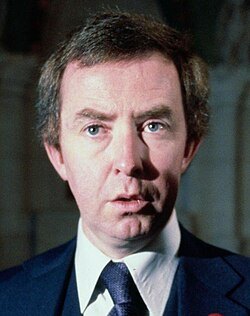
Biography
Charles Joseph Clark was born on June 5, 1939, in High River, Alberta, where his family published the local weekly newspaper. He studied history at the University of Alberta and later earned a master's degree in political science there. He briefly attended law school at Dalhousie University and the University of British Columbia but did not complete a law degree.
Before entering Parliament, Clark worked as a journalist and was active in Progressive Conservative organizations. He ran unsuccessfully for the Alberta legislature in 1967, worked for provincial Progressive Conservative leader Peter Lougheed, served as an aide to federal leader Robert Stanfield and taught political science. In 1973 he married Maureen McTeer, who later became a lawyer and author; they have one daughter, Catherine.
Clark was elected to the House of Commons for the Alberta riding of Rocky Mountain in 1972 and later represented Yellowhead. When Stanfield stepped down, Clark entered the 1976 leadership race as a little-known candidate and won on the fourth ballot in February 1976, defeating Claude Wagner and Brian Mulroney among others. He was 36 years old.
In the election of May 22, 1979, the Progressive Conservatives won the most seats but fell short of a majority. Clark was sworn in on June 4, 1979, the day before his 40th birthday, becoming the youngest prime minister in Canadian history. His government chose to govern as if it held a majority. It introduced freedom of information legislation and proposed to privatize Petro-Canada, and an early pledge to move Canada's embassy in Israel to Jerusalem was dropped after strong criticism.
The government's first budget, presented by finance minister John Crosbie in December 1979, included an 18-cent-per-gallon increase in the federal excise tax on gasoline. On December 13, 1979, the House of Commons passed a non-confidence motion on the budget by 139 votes to 133, and Parliament was dissolved. The Liberals under Pierre Trudeau won a majority in the election of February 18, 1980, ending Clark's government after about nine months. Clark remained party leader, but after receiving the support of about two-thirds of delegates in a 1983 leadership review he called a leadership convention, which he lost to Brian Mulroney in June 1983.
After the Progressive Conservatives won the 1984 election, Clark served as secretary of state for external affairs from 1984 to 1991. In that role he dealt with Commonwealth sanctions against apartheid South Africa and with Canada's response to Iraq's invasion of Kuwait. From 1991 to 1993 he was president of the Privy Council and minister responsible for constitutional affairs, leading federal efforts that produced the Charlottetown Accord, which voters rejected in a 1992 referendum. He did not seek re-election in 1993.
Clark returned to politics in 1998, when he again won the leadership of the Progressive Conservative Party. He entered the House through a by-election in Kings–Hants, Nova Scotia, in 2000 and then won Calgary Centre in the general election later that year. He stepped down as leader in 2003 and left Parliament in 2004, having opposed the merger of his party with the Canadian Alliance. In later years he worked in international development and democracy assistance, taught at universities and wrote on Canada's role in the world. He was made a Companion of the Order of Canada.
Public debt while in office
- Debt to GDP, taking office
- 47.1% (end-1978)
- Leaving office
- 44.2% (end-1979)
- Change
- -2.9 points of GDP
- In dollars (at the time)
- $117.9 billion → $126.3 billion
Gross public debt of all levels of government as a share of GDP at the year-end nearest each change of prime minister (IMF). Compare every prime minister.