6th Prime Minister of Canada
Charles Tupper
Conservative prime minister of Canada, 1896.
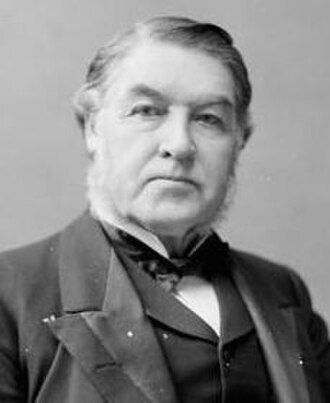
Biography
Sir Charles Tupper was Canada's sixth prime minister, holding office from 1 May to 8 July 1896, the shortest term of any prime minister. He was born on 2 July 1821 in Amherst, Nova Scotia, the son of a Baptist minister. He studied medicine at the University of Edinburgh, graduating in 1843, and returned to practise as a physician in Amherst. He later became the first president of the Canadian Medical Association.
Tupper entered Nova Scotia politics in 1855, winning a seat in Cumberland County by defeating the noted reformer Joseph Howe. He served as provincial secretary and became premier in 1864. His government established free, tax-supported public schools in Nova Scotia. He was a leading advocate of a union of the British North American colonies, attended the Charlottetown, Quebec and London conferences, and is counted among the Fathers of Confederation. He brought Nova Scotia into Confederation despite strong opposition in the province.
In the first federal election in 1867 Tupper won Cumberland and was the only supporter of Confederation elected from Nova Scotia. He held a series of posts in John A. Macdonald's cabinets, including president of the Privy Council, minister of inland revenue and minister of customs. After 1878 he was minister of public works and then minister of railways and canals, where he oversaw much of the government's support for the Canadian Pacific Railway. From 1883 he served as Canada's high commissioner in London, returning briefly in 1887–1888 to act as finance minister. He was made a baronet in 1888.
In January 1896, with Mackenzie Bowell's cabinet in revolt over the Manitoba Schools Question, Tupper returned to Canada as secretary of state and government leader in the House of Commons, winning a by-election in Cape Breton. He tried to pass remedial legislation restoring Catholic schools in Manitoba, but the bill was blocked by opposition delay before Parliament's term expired. He succeeded Bowell as prime minister on 1 May 1896 and lost the general election on 23 June to Wilfrid Laurier's Liberals. He resigned on 8 July after a dispute with the governor general, Lord Aberdeen, who refused to approve appointments he made after his defeat.
Tupper led the Opposition until the 1900 election, when he lost his own seat, and then retired from politics. He spent most of his remaining years in England. He died at Bexleyheath, Kent, on 30 October 1915, and was buried in Halifax.
Public debt while in office
- Debt to GDP, taking office
- 44.4% (end-1895)
- Leaving office
- 44.2% (end-1896)
- Change
- -0.2 points of GDP
Gross public debt of all levels of government as a share of GDP at the year-end nearest each change of prime minister (IMF). Compare every prime minister.